
Introduction
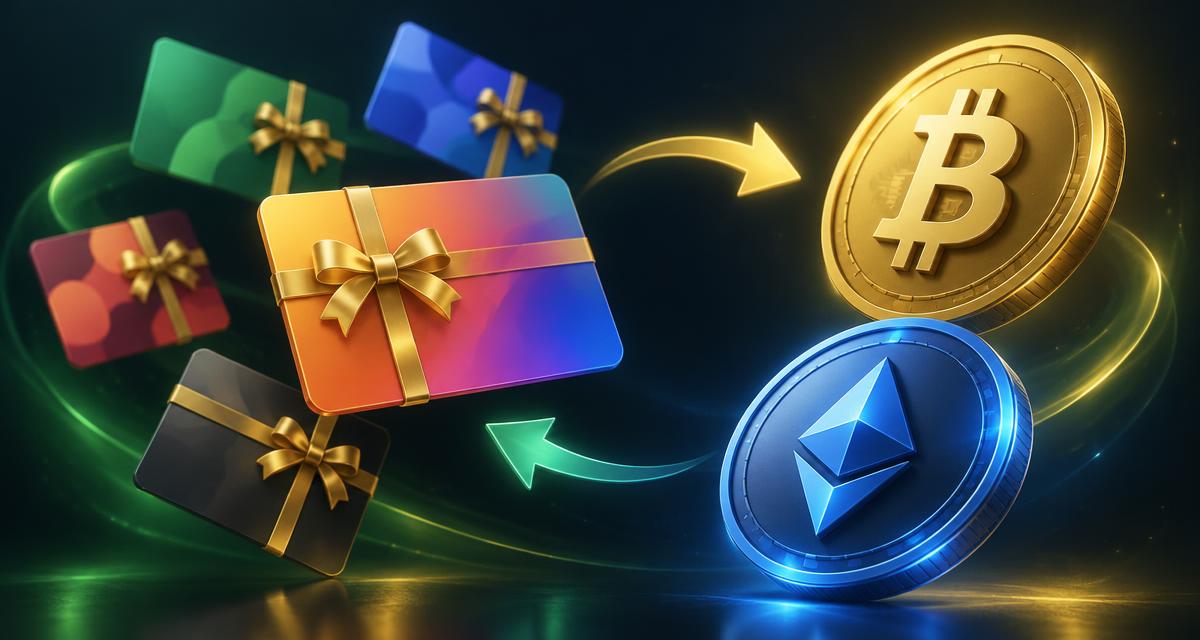
A gift card has a printed face value, but what someone is willing to pay for it — its market value — can be higher or lower. Cryptocurrency has added another way for people to exchange digital value across borders.
Understanding gift-card demand, pricing, liquidity and cryptocurrency together can create opportunities. Profits are never guaranteed. This guide explains how the marketplace works so you can develop your own strategy.
“Trading on your own terms doesn't mean guaranteed profits. It means understanding the market well enough to make informed decisions.”
How gift-card trading works
Gift-card trading means buying cards at one price and selling or exchanging them at another. Here's an example (illustrative only):
Face value
$100
Purchase price
$85
Sale price
$92
Gross difference
$7
That $7 is not your profit yet. Real profit must account for:
- Platform fees
- Payment costs
- Transaction costs
- Potential losses
- Other business expenses
Buy where there is a discount
Traders often look for gift cards offered below face value, then look for buyers who value them more.
| Face value | Purchase cost | Potential sale | Gross difference |
|---|---|---|---|
| $25 | $21 | $23 | $2 |
| $50 | $43 | $47 | $4 |
| $100 | $85 | $92 | $7 |
| $250 | $210 | $230 | $20 |
Illustrative examples only. They are not guaranteed returns and don't include fees.
Don't buy just because a card is cheap
Price alone doesn't tell you whether a card will sell. Before buying, evaluate:
- Demand
- Brand
- Country
- Currency
- Denomination
- Verification
- Liquidity
- Selling speed
- Fees
- Buyer demand
- Fraud risk
“A cheap gift card isn't necessarily a profitable gift card.”
Understand what people actually want
Popular categories include online shopping, gaming, electronics, entertainment, food, streaming and mobile services. Demand also differs by country.
An Amazon US card, an Amazon Canada card, an Amazon UK card and an Amazon Germany card are separate products with different currencies and buyers. Never assume country-specific cards are interchangeable.
Turn gift-card trading into a repeatable process
Instead of relying on single lucky deals, successful traders follow the same steps every time:
An example of splitting $500 across several smaller positions:
Diversifying reduces dependence on one transaction, but it does not eliminate risk.
Where crypto comes into the picture
Bitcoin (BTC) and Ethereum (ETH) can be bought, sold, held or transferred. A gift-card marketplace can connect people who want gift cards with people who want crypto. CardCashGo supports BTC, ETH and USDT-TRC20 on TRON mainnet — see supported assets and how your crypto wallet handles deposits and withdrawals. USDT is supported only on TRON (TRC-20), and CardCashGo covers customer TRON network fees within funding limits; platform fees still apply.
P2P trading
In peer-to-peer trading, people trade directly with each other. For example, a seller creates an offer: “$100 gift card — receive BTC.” A buyer reviews the offer and decides whether the exchange makes sense.
Competitive pricing, seller reputation, payment methods and marketplace trust all affect demand. On CardCashGo's P2P marketplace, the crypto in a trade is held in escrow until the offer creator verifies payment and releases it with fresh 2FA, and disputes can be reviewed by staff. Escrow protects the crypto side; it can't reverse an outside payment.
Build your own trading strategy
Conservative
- • Highly demanded cards
- • Smaller margins
- • Focus on liquidity
Growth
- • Reinvest profits
- • Increase inventory gradually
- • Track multiple categories
Specialist
- • Specific brands
- • Specific countries
- • Specific categories
Choose an approach that matches your own risk tolerance and circumstances.
Track every transaction
Keep a simple spreadsheet with these columns:
| Date | Card | Face value | Purchase cost | Sale price | Fees | Net profit |
|---|---|---|---|---|---|---|
| Oct 1 | Example card | $100 | $85 | $92 | $2 | $5 |
SALE PRICE
− PURCHASE COST
− FEES
= NET PROFIT
After 50–100 tracked transactions, patterns appear: which cards sell fastest, which margins hold up, and where money leaks.
Revenue is not profit
$10,000 in sales does not mean $10,000 in profit.
Sales
$10,000
Inventory cost
−$9,200
Fees & expenses
−$400
Approx. profit
$400
Gross revenue is everything you sold. Gross profit is revenue minus the cost of the cards. Net profit is what's left after fees and every other expense.
Crypto risk management
BTC and ETH prices move. If you receive $500 worth of BTC, it could be worth $470 or $530 a short time later. USDT aims to track $1 but still carries issuer, freezing and depegging risks. Keep these in mind:
- Volatility
- Network fees
- Transaction confirmations
- Wallet security
- Market liquidity
- Scams
- Taxes and legal obligations
This is general education, not individual financial advice.
Protect yourself from scams
Verify first. Release second.
- Fake payment screenshots
- Stolen gift cards
- Chargebacks
- Fake blockchain confirmations
- Phishing links
- Fake support accounts
- Social engineering
- Pressure to release assets early
- Moving trades off-platform
Always check your own account, keep chat in the trade room and follow escrow procedures. Learn more on our security page.
Build a reputation
Buyers look for sellers they can trust. Good habits include:
- Complete trades properly
- Communicate clearly
- Price competitively
- Respond promptly
- Follow marketplace rules
- Resolve disputes professionally
CardCashGo shows seller levels and trust stats built from real completed trades. A strong record can help establish trust, though it doesn't guarantee more sales.
Start small
You don't need a large amount of capital. Start with an amount you can afford to lose.
Instead of asking “How much money can I make?”, ask:
“Can I complete 10 transactions while understanding exactly where my money went?”
Create your own rules
Trading on your own terms means deciding:
- What you trade
- When you trade
- How much capital you use
- Which markets you target
- What margins you accept
- When you walk away
Start with knowledge. Scale with experience.
Gift-card and crypto trading can create opportunities, and it carries real risks. Start small, learn the market, protect your capital, track your results and scale responsibly. Questions? Read the FAQ, or learn how to buy gift cards and sell gift cards.
Ready to Explore the Marketplace?
Buy gift cards. Sell gift cards. Create offers. Trade with BTC, ETH or USDT-TRC20.
CardCashGo · Buy • Sell • Trade • Global
Educational information only. Gift-card and cryptocurrency trading involve financial, fraud, market, and transaction risks. Examples in this article are illustrative and do not guarantee profits or returns. Cryptocurrency prices can change rapidly. Readers should evaluate their own circumstances and comply with applicable laws, regulations, tax requirements, and marketplace rules.